
-

-
PRODUCTSEnsure products and service can always meet customers’ need to pursue permanent highest satisfaction.

-
NEWSSurvival by Quality, Development by Credit, Guide by Service, Customer as Focus.

-
CONTACT USThe marketing network is throughout China and big cities around the world.


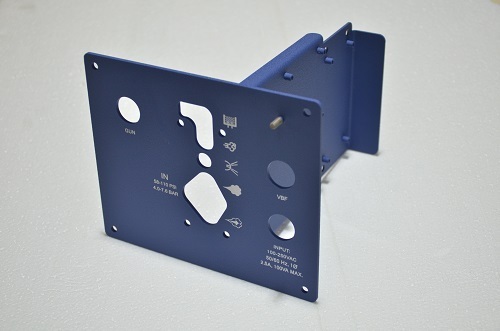
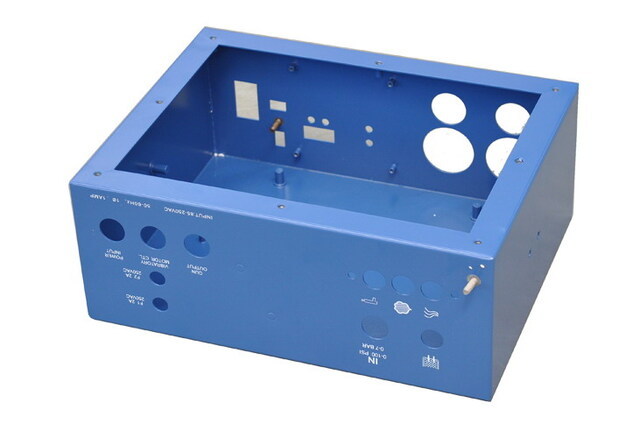
Spray coating
2024-03-28
Spraying plastic is a surface treatment method that involves spraying plastic powder onto parts. It is commonly referred to as electrostatic powder coating, a decorative technology for metal surface treatment that has been widely adopted internationally since the 1980s. Compared to conventional spray painting, this technology has advantages in terms of advanced processes, energy efficiency, safety, reliability, and vibrant colors. Therefore, it is often used in light industry and home decoration. The working principle involves charging the plastic powder through high-voltage electrostatic equipment, and under the influence of an electric field, the coating is sprayed onto the surface of the workpiece, where the powder is evenly adsorbed, forming a powdery coating. After high-temperature baking, the powder levels out and cures, melting into a dense final protective coating with varying effects, firmly adhering to the surface of the workpiece.
Advantages
No need for thinners, construction is environmentally friendly and non-toxic to humans; the appearance quality of the coating is excellent, with strong adhesion and mechanical strength; the curing time for spraying is short; the coating has significantly higher corrosion and wear resistance; no primer is needed; construction is simple with low technical requirements for workers; costs are lower than spray painting processes; some construction sites have explicitly stated that electrostatic spraying must be used; during the electrostatic powder spraying process, the common dripping phenomenon seen in spray painting does not occur.
Process Principle
It utilizes the phenomenon of corona discharge to adsorb powder coatings onto the workpiece. The process is as follows: the powder coating is delivered to the spray gun by a powder supply system using compressed air. A high voltage generated by a high-voltage electrostatic generator is applied at the front end of the spray gun. Due to corona discharge, a dense charge is generated nearby. When the powder is ejected from the nozzle, it forms charged coating particles that are attracted to the workpiece with the opposite polarity due to electrostatic force. As more powder is sprayed, the charge accumulates. When a certain thickness is reached, electrostatic repulsion occurs, preventing further adsorption, thus allowing the entire workpiece to obtain a certain thickness of powder coating. The powder is then heated to melt, level, and cure, forming a hard film on the surface of the workpiece.
Tag:
Previous Page
Next Page
Previous Page:
Next page:
News Center
How to carry out waterproof and dustproof processing for cabinet enclosures?
Cabinets and enclosures have become common in our lives, but I believe everyone is quite unfamiliar with these products. To understand cabinets and enclosures, we need to start with the more simple and basic aspects. To give everyone a deeper understanding of cabinet processing, let Qingdao Haibo take you through it.

QR code
Contact Information
No. 96 Jimo Haier Road (formerly known as Tianshan 2nd Road), Qingdao Post Code:266228
MESSAGE BOARD