
-

-
PRODUCTSEnsure products and service can always meet customers’ need to pursue permanent highest satisfaction.

-
NEWSSurvival by Quality, Development by Credit, Guide by Service, Customer as Focus.

-
CONTACT USThe marketing network is throughout China and big cities around the world.


Sheet metal parts
2024-03-28
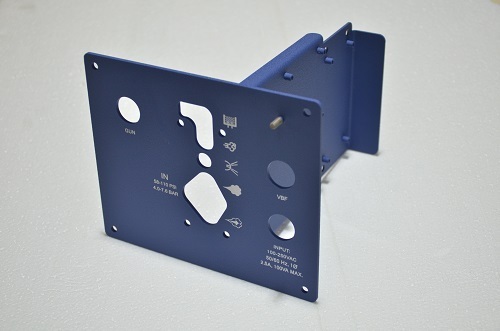
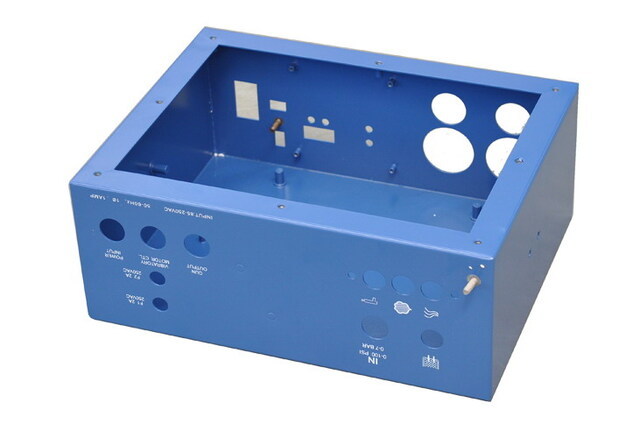
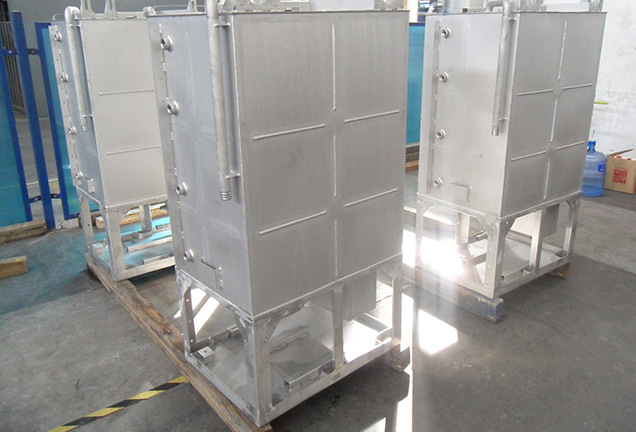
Sheet metal parts: Sheet metal is a comprehensive cold processing technology for metal sheets (usually below 6mm), including cutting, punching/cutting/composite, bending, welding, riveting, splicing, and forming (such as automobile bodies). Its significant feature is that the thickness of the same part is consistent. Products processed by sheet metal technology are called sheet metal parts. The term 'sheet metal parts' generally refers to different things in different industries and is often used during assembly.
Sheet metal materials: There are many types of sheet metal materials suitable for stamping processing, widely used in the electronics and electrical industry, including:
1. Ordinary cold-rolled sheet SPCC
SPCC refers to steel ingots that are continuously rolled into steel sheet coils or sheets of the required thickness through a cold rolling mill. The SPCC surface has no protection and is easily oxidized when exposed to air, especially in humid environments where the oxidation rate accelerates, resulting in dark red rust. The surface should be painted, electroplated, or otherwise protected during use.
2. Galvanized steel sheet SECC
The substrate of SECC is general cold-rolled steel coils, which become electro-galvanized products after degreasing, pickling, electroplating, and various post-treatment processes in a continuous electro-galvanizing production line. SECC not only has the mechanical properties and similar processability of general cold-rolled steel sheets but also has excellent corrosion resistance and decorative appearance. It is highly competitive and substitutive in the market for electronic products, home appliances, and furniture. For example, SECC is commonly used in computer cases.
3. Hot-dip galvanized steel sheet SGCC
Hot-dip galvanized steel coils refer to semi-finished products that have been hot-rolled and pickled or cold-rolled, which are cleaned, annealed, and immersed in a molten zinc bath at approximately 460°C to coat the steel sheets with a zinc layer, followed by tempering, leveling, and chemical treatment. SGCC material is harder than SECC material, has poorer ductility (avoiding deep drawing designs), a thicker zinc layer, and poorer weldability.
4. Stainless steel SUS301
The chromium (Cr) content is lower than that of SUS304, resulting in poorer corrosion resistance, but it can achieve good tensile strength and hardness through cold processing, with good elasticity, commonly used for spring clips and EMI shielding.
5. Stainless steel SUS304
One of the most widely used stainless steels, it has better corrosion resistance and heat resistance due to its nickel (Ni) content compared to chromium (Cr) steel, possessing very good mechanical properties, no heat treatment hardening phenomenon, and no elasticity.
Tag:
Next Page
Next page:
News Center
How to carry out waterproof and dustproof processing for cabinet enclosures?
Cabinets and enclosures have become common in our lives, but I believe everyone is quite unfamiliar with these products. To understand cabinets and enclosures, we need to start with the more simple and basic aspects. To give everyone a deeper understanding of cabinet processing, let Qingdao Haibo take you through it.

QR code
Contact Information
No. 96 Jimo Haier Road (formerly known as Tianshan 2nd Road), Qingdao Post Code:266228
MESSAGE BOARD